
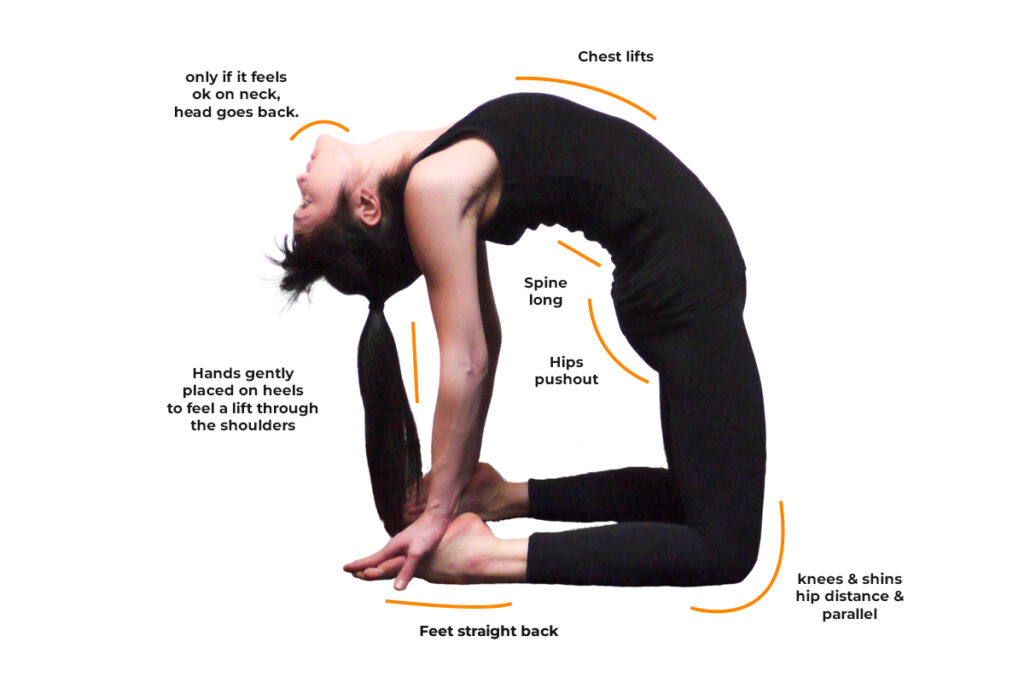
Camel Pose, or Ustrasana in Sanskrit, is a profound backbend that mimics the distinct hump of a camel. This challenging yoga pose demands a blend of strength, flexibility, and keen body awareness. Beyond its physical demands, Ustrasana is celebrated for its ability to open the chest, enhance posture, and foster emotional balance by stimulating the Anahata Chakra (heart center).
How to Practice Camel Pose (Ustrasana)
- Start Kneeling: Begin by kneeling on your mat. Ensure your knees are hip-width apart and your feet are either flat or with toes tucked.
- Engage Your Core: Gently tuck your tailbone and draw your lower belly in. This supports your lower back and helps maintain a neutral spine.
- Initiate the Backbend: Inhale as you lift your chest, drawing your shoulder blades together and back. For initial support, you can place your hands on your lower back.
- Reach Back: If comfortable, begin to lean back, extending your hands towards your heels. You can grip your heels or use yoga blocks placed outside your ankles for added support.
- Deepen the Pose: Continue to lift your chest and press your hips forward to create a deeper backbend. Remember to keep your core engaged and your spine long.
- Hold and Breathe: Hold the pose for a few breaths, focusing on maintaining length through your spine and openness in your chest.
- Release: Gently release your hands from your heels and return to a kneeling position, stacking your spine upright. Conclude by resting in Child’s Pose (Balasana) to release your back.
Modifications and Precautions
- For Beginners: Start by keeping your hands on your lower back or use yoga blocks for support under your hands.
- Lower Back Pain: To avoid compression, shift your hips slightly back towards your heels or use blocks.
- Neck Discomfort: Keep your chin slightly tucked towards your throat to prevent hyperextension.
- Contraindications: Avoid this pose if you have herniated discs, acute back pain, advanced spondylitis, or recent injuries. Always consult a healthcare professional if you have concerns.
Key Benefits
- Opens Chest and Shoulders: Improves posture and increases breathing capacity.
- Strengthens Back Muscles: Enhances overall back and spinal health.
- Stretches Hip Flexors: Increases flexibility in the hips and thighs.
- Stimulates Abdominal Organs: May aid in digestion.
- Promotes Emotional Balance: Activates the Anahata chakra, potentially releasing emotions and reducing anxiety.


 Life is for living. Breathe. Move. Be
Leave a comment