
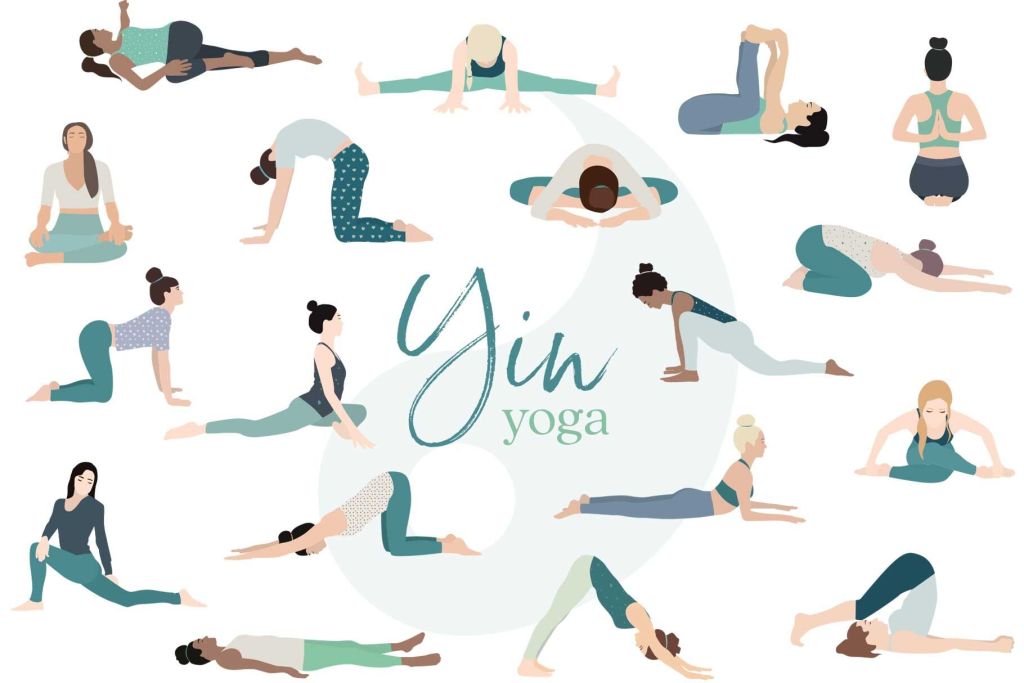
Yin Yoga is a slow-paced, meditative style of yoga that focuses on stretching the body’s deep connective tissues—the ligaments, tendons, fascia, and joints. Unlike more active or “yang” forms of yoga (like Vinyasa or Ashtanga), Yin Yoga emphasizes stillness and long-held, passive poses.
The Philosophy and Principles
Yin Yoga is based on the Taoist concepts of yin and yang, two opposite and complementary forces in nature.
- Yang represents what is active, moving, and hot. In the body, this corresponds to the muscles, which are more pliable and respond to dynamic movement and heat.
- Yin represents what is still, passive, and cool. In the body, this corresponds to the dense connective tissues that surround our joints and are less elastic.
The practice is built on three main principles:
- Find Your Edge: This means moving into a pose until you feel a gentle sensation or “pull” in the targeted area, but without pushing so far that you feel pain. The goal is to find a place of comfortable discomfort that you can hold for an extended period.
- Be Still: Once you’ve found your edge, the practice is about holding the pose with a sense of stillness. This is not just physical stillness but also mental stillness, as you learn to sit with any discomfort and observe your thoughts without reacting to them.
- Hold the Pose for Time: Yin poses are typically held for anywhere from 3 to 10 minutes or even longer. This extended duration is what allows the gentle stress to penetrate the deep connective tissues, helping to improve their health and flexibility.
Key Characteristics
- Long Holds: Poses are held for minutes at a time, allowing for a deep release in the connective tissues.
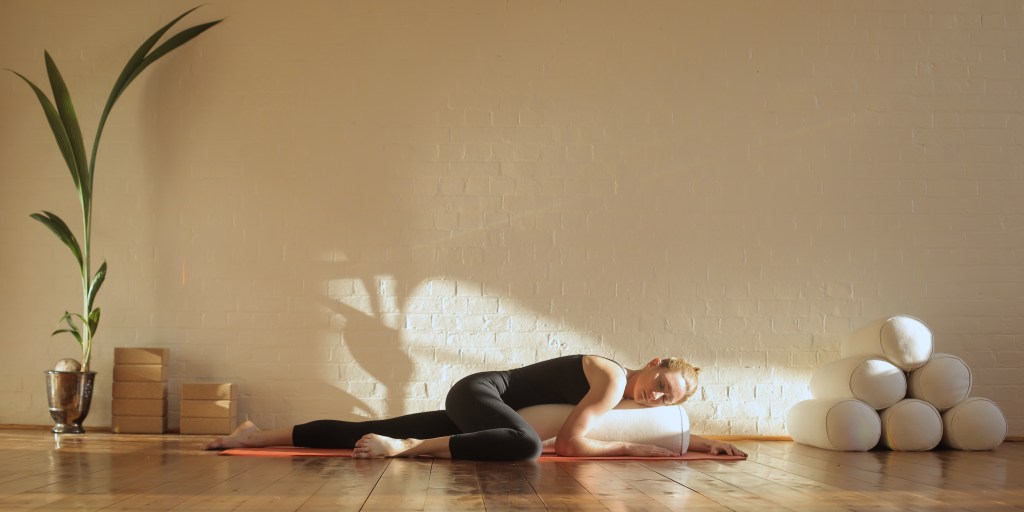
- Floor-Based: The majority of Yin poses are done on the floor in seated or reclined positions.
- Minimal Muscular Effort: The focus is on relaxing the muscles in the targeted area so that the stretch can get into the deeper connective tissues.
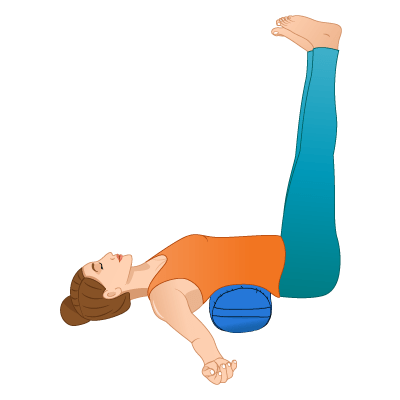
- Use of Props: Props like bolsters, blankets, and blocks are often used to support the body and help you find your “edge” safely.
- Meditative and Introspective: The long, quiet holds provide an opportunity for deep introspection and mindfulness. It’s a practice that can be as mentally challenging as it is physically.
Benefits of Yin Yoga
- Increases Flexibility and Joint Mobility: By targeting the ligaments and fascia, Yin Yoga can improve your overall range of motion, particularly in the hips, pelvis, and spine.
- Reduces Stress and Anxiety: The slow pace and focus on stillness help to activate the parasympathetic nervous system (the “rest and digest” response), calming the body and mind.
- Improves Circulation: The pressure and release in the poses can help to improve circulation to the joints and tissues.
- Complements Other Activities: Yin Yoga is a perfect complement to more active, “yang” activities like running, weightlifting, or Vinyasa yoga, as it helps to balance and restore the body.
Yin Yoga vs. Restorative Yoga
While often confused, Yin and Restorative yoga have different intentions:
- Yin Yoga is about applying a healthy “stress” to the connective tissues to increase flexibility and circulation. You are actively finding your edge.
- Restorative Yoga is about complete “rest” and relaxation. Poses are fully supported by props to encourage the body to let go of all effort and calm the nervous system.


 Life is for living. Breathe. Move. Be
Leave a comment